
Introduction
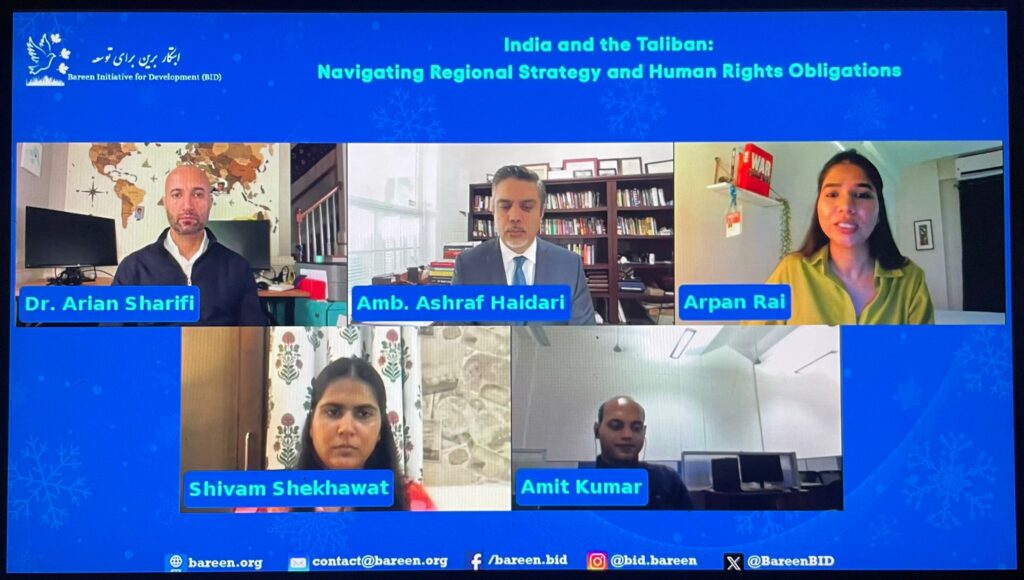
The Taliban’s return to power in Afghanistan in August 2021 marked a pivotal shift in South Asia’s political and geopolitical landscape. India, a key regional power with significant investments in Afghanistan during the Republic era, has navigated this transition with a cautious yet pragmatic approach toward the Taliban. This evolving relationship, characterized by diplomatic engagement, humanitarian aid, and limited developmental cooperation, raises critical questions about its implications for regional power dynamics, security, and human rights. This seminar seeks to rigorously analyze India’s engagement with the Taliban, evaluate its geopolitical and humanitarian consequences, and propose a framework for balancing strategic interests with ethical responsibilities.
Rationale for the Seminar
India’s shift from initial opposition to cautious engagement with the Taliban reflects a strategic recalibration driven by regional imperatives. This transition occurs against the backdrop of India’s rivalry with Pakistan and China, Afghanistan’s pivotal role in connecting India to Central Asia via the Chabahar Port, and the alarming deterioration of human rights under Taliban rule. The seminar aims to provide a platform for critical, evidence-based discussions to dissect these dynamics, assess their long-term implications, and formulate principled policy recommendations. By convening experts, policymakers, and human rights advocates, the event fosters a multidimensional dialogue to address the complex interplay of geopolitics, security, and human rights in the region.
Seminar Objectives
- Analyze India’s Engagement with the Taliban: Critically examine the strategic, economic, and political drivers behind India’s pragmatic approach to the Taliban and its departure from earlier policies of opposition.
- Evaluate Geopolitical Implications: Assess the impact of India-Taliban relations on the regional balance of power, particularly in the context of India’s competition with Pakistan and China.
- Scrutinize Human Rights Consequences: Investigate the effects of India’s engagement on Afghanistan’s human rights landscape, with a focus on women, minorities, and civil liberties.
- Develop Policy Recommendations: Propose actionable, ethically grounded strategies for regional and international actors to balance strategic interests with commitments to human rights and democratic values.
- Promote Multilateral Dialogue: Facilitate robust exchanges among academics, policymakers, and civil society to shape a sustainable and equitable future for Afghanistan and the region.
Discussion Themes
- Historical and Strategic Context of India-Taliban Relations:
- India’s historical role as a key partner of Afghanistan during the Republic era and its initial resistance to the Taliban.
- The strategic rationale behind India’s shift to cautious engagement post-2021, including economic and security considerations.
- The influence of India-Pakistan and India-China rivalries on shaping New Delhi’s Afghanistan policy.
- Geopolitical Implications for South Asia and Beyond:
- The impact of India-Taliban relations on the regional power equilibrium in South Asia and Central Asia.
- The strategic significance of the Chabahar Port and the International North-South Transport Corridor in fostering India-Taliban economic ties.
- The consequences of India’s engagement for Pakistan and China’s influence in Afghanistan and the broader region.
- Human Rights and Ethical Challenges:
- The Taliban’s policies and their devastating impact on women’s rights, minority protections, and civil liberties.
- India’s responsibility as a democratic regional power to uphold human rights standards in its engagement with the Taliban.
- The ethical dilemmas of prioritizing geopolitical and economic interests over human rights obligations.
- Future Scenarios and Regional Stability:
- Potential trajectories for India-Taliban relations in the medium and long term.
- Implications for regional stability, including the fight against extremist groups such as Tehrik-i-Taliban Pakistan (TTP).
- Strategies to mitigate risks of instability while fostering sustainable development and cooperation.
Format
- Duration: 2 hours, comprising a keynote address, a moderated panel discussion, and an interactive Q&A session.
- Platform: Conducted via Zoom, with live streaming on the Bareen Initiative for Development’s website and social media channels to ensure global accessibility.
- Moderation: Facilitated by senior experts from the Bareen Initiative for Development to ensure rigorous, inclusive, and constructive dialogue.
Expected Outcomes
- Enhanced Understanding: A deeper, evidence-based comprehension of the drivers, dynamics, and consequences of India’s engagement with the Taliban.
- Policy Innovation: Development of actionable recommendations that integrate strategic imperatives with human rights commitments.
- Network Building: Establishment of collaborative networks among scholars, policymakers, and civil society for sustained engagement on Afghan and regional issues.
- Amplification of Marginalized Voices: Creation of a platform to elevate the perspectives of Afghan communities, particularly women, youth, and minorities, in global discourse.
Key Message
India’s engagement with the Taliban presents opportunities for advancing regional stability and economic connectivity, particularly through initiatives like the Chabahar Port and the North-South Corridor. However, this engagement risks legitimizing a regime with a well-documented record of human rights abuses unless anchored in a principled commitment to democratic values and accountability. As a regional power and global democracy, India has a unique opportunity and responsibility to balance its strategic interests with advocacy for human rights. This seminar underscores the necessity of critical, multilateral dialogue to forge a sustainable, just, and secure future for Afghanistan and the region.
Target Audience
- Scholars and Analysts: Experts in geopolitics, international relations, and human rights.
- Policymakers and Diplomats: Representatives from governments, international organizations, and diplomatic missions.
- Civil Society Leaders: NGOs, women’s rights advocates, and organizations supporting Afghan refugees and marginalized groups.
- Afghan Diaspora: Afghan youth, women, and community leaders seeking to influence policy and discourse.
- Global Public: Individuals and institutions committed to understanding and addressing global human rights and geopolitical challenges.
Call to Action
The Bareen Initiative for Development (BID) calls on stakeholders to engage in this critical dialogue to reassess past policies and chart a principled path forward for Afghanistan and the region. Through rigorous analysis, collaborative innovation, and a commitment to justice, this seminar aims to contribute to the creation of safer, more equitable, and resilient communities. Join us to shape a future that upholds both strategic imperatives and universal human rights.
English Report
Persian Report