Concept Note
Introduction
Four years have passed since the fall of Kabul to the Taliban in August 2021, an event that not only altered Afghanistan’s trajectory but also left profound implications for regional and global politics, human rights, and migration. This online seminar, marking the fourth anniversary of this pivotal moment, provides an opportunity to reflect on the causes, consequences, and lessons of this event. Through a comprehensive and multidimensional lens, the event aims to analyze the past and propose pathways for a more sustainable future.
Background and Rationale
The fall of Kabul in 2021 was a turning point in contemporary history, signifying not only the Taliban’s return to power but also a collective failure of the international community to uphold democracy and human rights in Afghanistan. This event raised critical questions about foreign policy, international interventions, and the role of civil society in crisis management. Four years on, the impacts of this transformation remain evident, particularly for millions of Afghans, especially women and minorities. This seminar seeks to revisit this event and examine its consequences at national, regional, and global levels.
Seminar Objectives
- Analyze the Causes of the Fall: Examine the political, military, and social factors that led to the rapid collapse of the Afghan government.
- Assess the Consequences: Evaluate the impacts of the Taliban’s return on human rights, education, the economy, and regional security.
- Draw Lessons for the Future: Identify strategies to prevent similar crises in other parts of the world.
- Foster Global Dialogue: Create a platform for discussion among experts, policymakers, and civil society actors on Afghanistan’s future.
- Amplify Afghan Voices: Highlight the narratives of the Afghan people, particularly women and marginalized groups.
Discussion Themes and Seminar Structure
- Historical and Political Context of the Fall of Kabul
- The role of foreign interventions and the withdrawal of international forces.
- Failures of the previous government and systemic corruption.
- Human and Social Consequences
- The state of human rights, particularly for women and minorities, under Taliban rule.
- The migration and displacement crisis, both internal and external.
- Regional and Global Impacts
- The role of neighboring countries and international actors in Afghanistan’s developments.
- Geopolitical consequences of the Taliban’s return.
- The Future of Afghanistan: Challenges and Opportunities
- Diplomatic and civil society strategies to support the Afghan people.
- The role of civil society and international organizations in reconstruction and peacebuilding.
Format
- Duration: 2 hours, including a keynote address, panel discussion, and Q&A session.
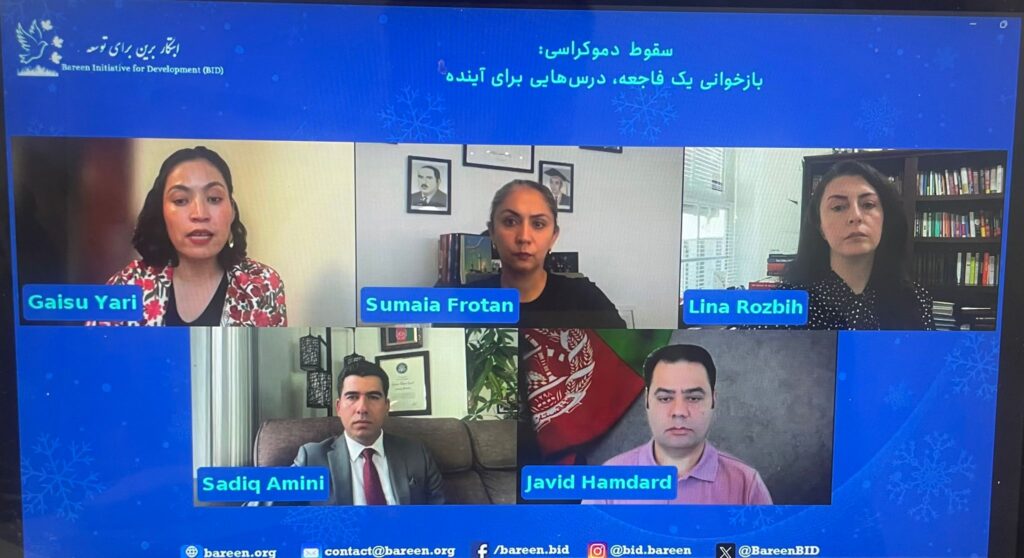
- Platform: Zoom, with live streaming on the Bareen Initiative for Development (BID)’s website and social media platforms.
- Moderation: Facilitated by experts from the Bareen Initiative for Development (BID) to ensure an inclusive and constructive dialogue.
Expected Outcomes
- Increased Awareness: Enhanced public and expert understanding of the causes and consequences of the fall of Kabul.
- Networking: Fostering connections among activists, policymakers, and civil society organizations for future collaboration.
- Actionable Recommendations: Developing practical proposals to support the Afghan people and prevent similar crises.
- Amplifying Afghan Voices: Providing a platform for the narratives of Afghans, particularly marginalized groups, to be heard.
Key Message
“The fall of Kabul was not only a political failure but also a wake-up call for rethinking global commitments to democracy, human rights, and sustainable peace. Afghanistan’s future depends on global cooperation and solidarity.”
Target Audience
- Experts and Researchers: Analysts of political, social, and human rights issues.
- Policymakers: Representatives of international organizations, governments, and diplomatic entities.
- Civil Society Activists: NGOs, women’s rights advocates, and groups supporting migrants.
- Afghan Community: The Afghan diaspora, particularly youth and women, to engage in the discourse.
- General Public: Individuals interested in global issues and human rights.
Call to Action
The Bareen Initiative for Development (BID) invites stakeholders to join this critical dialogue to reflect on the past and chart a path toward a better future for Afghanistan and the region. Through collaboration and innovation, this seminar aims to contribute to safer and more cohesive communities.
English File
Persian File